
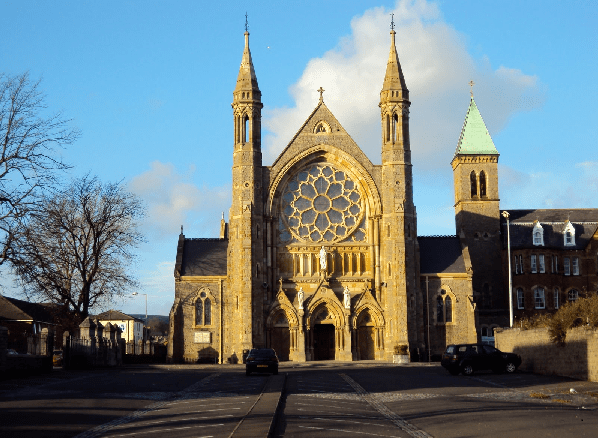
Roman Catholic Archbishop of Armagh Eamon Martin – a Derry/Londonderry man – voiced the claim in January 2023 that the churches – including the Catholic church – could help to secure the TRUTH that many victims of terrorism have been denied since the signing of The Belfast Agreement back in 1998.
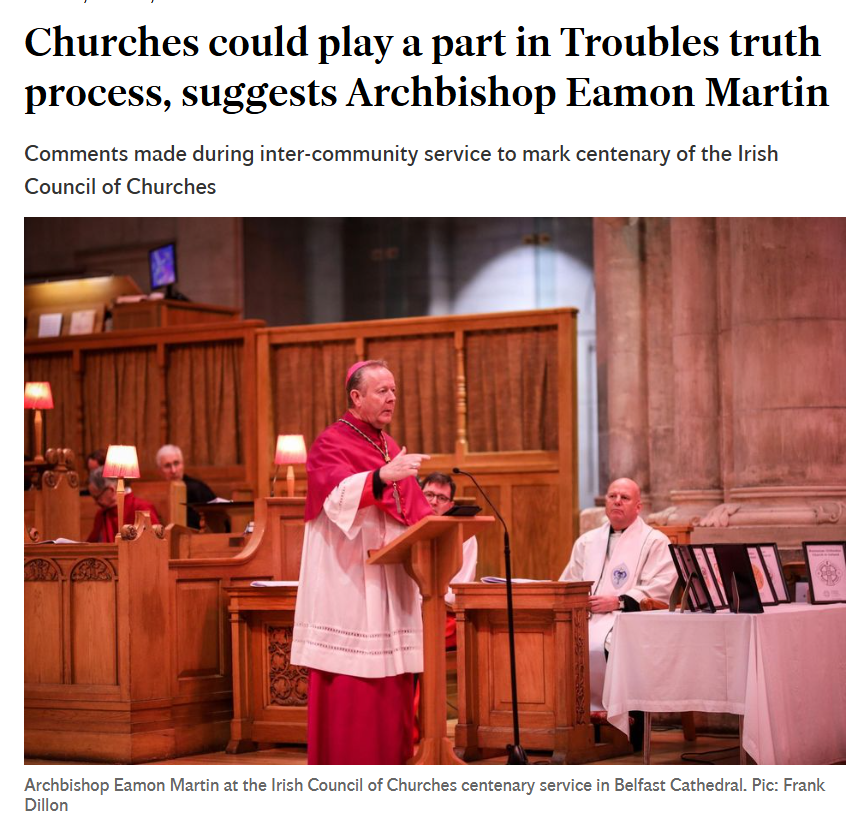
Archbishop Martin said:
Peace, reconciliation and forgiveness on this island will only be progressed by bringing to light the truths that remain hidden and festering about our troubled past…
Might we in the churches offer to help develop an agreed truth recovery process to address the legacy of pain and mistrust that continues to hang over us?
Is it possible to trust that Archbishop Eamon Martin would seek out the truth – and publish it – about a Roman Catholic Redemptorist monastery in Belfast that in the 1970s decided to become fully involved in the Provisional IRA’s campaign of terrorism not only affecting Belfast, but in fact the IRA’s entire campaign of terrorism affecting all of Northern Ireland and also England?
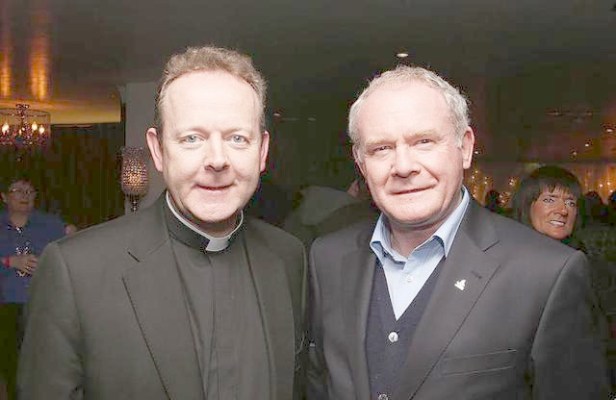
I have no doubt from my own direct experience as an IRA volunteer in the early 1970s – and later for IRA leaders Martin McGuinness and Kevin Mallon as a lone London Bomber in the summer of 1973 – and later as the IRA’s Derry Brigade Explosives Officer from 1974 until my arrest during the ceasefire in May 1975 – that Clonard’s Redemptorist Monastery provided the Belfast Brigade of the IRA with a secret operational headquarters from which murders and bombings were planned and ordered – but that also this same “safe house” operational headquarters served to give sanctuary to the members of the Provisional IRA’s GHQ Staff when they were in Belfast, those who had the responsibility for the Provisional IRA’s overall campaign of terrorism.
I have no doubt that the Down and Connor Diocesan Archive [Belfast is in the diocese called “Down and Connor”] contains evidence of Clonard Monastery’s partnership with the Provisional IRA in the 1970s – the period of some of the IRA’s most horrible Human Rights’ atrocities involving murders and bombings that affected Protestants and Catholics alike, civilians, police and soldiers, men, women and children.

Down and Connor diocesan priest, Fr. Peter Forde, is recorded in Republic of Ireland’s State Papers as having told Irish diplomat David Donoghue [who was on an information trawling mission in Northern Ireland] that IRA leader Gerry Adams had dumped his local Ballymurphy parish church in favour of Clonard Monastery.
The Irish Times article reported:
They show a former parish priest in Adams’ Ballymurphy neighbourhood in Belfast confided his “insights” into the IRA to Belfast-based Irish official David Donoghue, who was gathering intelligence to send back to Dublin.
Adams was “at most No 3 on the Army Council” at the time “but his influence on it is declining”, Fr Peter Forde said, adding Martin McGuinness was “No 2”. Although McGuinness appeared “to be merely a sidekick of Adams”, he was “in many ways more powerful”.
The priest said he didn’t know who was “No 1”.
Fr Forde went on to describe a “serious split” in the IRA army council over Sinn Féin ending its abstentionism policy in Ireland, which was worsened by the party’s poor performance in Dáil elections. McGuinness intervened and “swung the matter in Adams favour” but there remained “a lot of discontent ever since”.
Fr Forde said Mr Adams still “goes through the motions” of being a Catholic.
But rather than going to his local Ballymurphy church, he went to Mass at Clonard Monastery.
The “Southern Redemptorists there tend to be more wide-eyed about the Provos” than most Northern priests and “less likely, therefore, to ask him searching questions”.
If Fr. Forde was giving his intel on the IRA and on Clonard to a Southern diplomat, how much more was he giving to his own Bishop and all of that kind of intel was recorded and entered into the Down and Connor Diocesan Archive.
You can see a perfect example of a Bishop of Down and Connor scouring the Diocesan Archive for 40-year-old material useful to the Ballymurphy Families and IRA Commander Gerry Adams – Bishop Noel Treanor in 2010 searched the archive twice and then triumphantly joined a photoshoot with IRA Commander Adams.

It appeared that during in the first search of the Diocesan Archive nothing was found. It was only after some advice and pressure that a second search did uncover material that was missed during the first trawl – and the information described showed the kind of detailed reporting that individual priests were recording back in the 1970s that ended up in the Down and Connor Diocesan Archive.
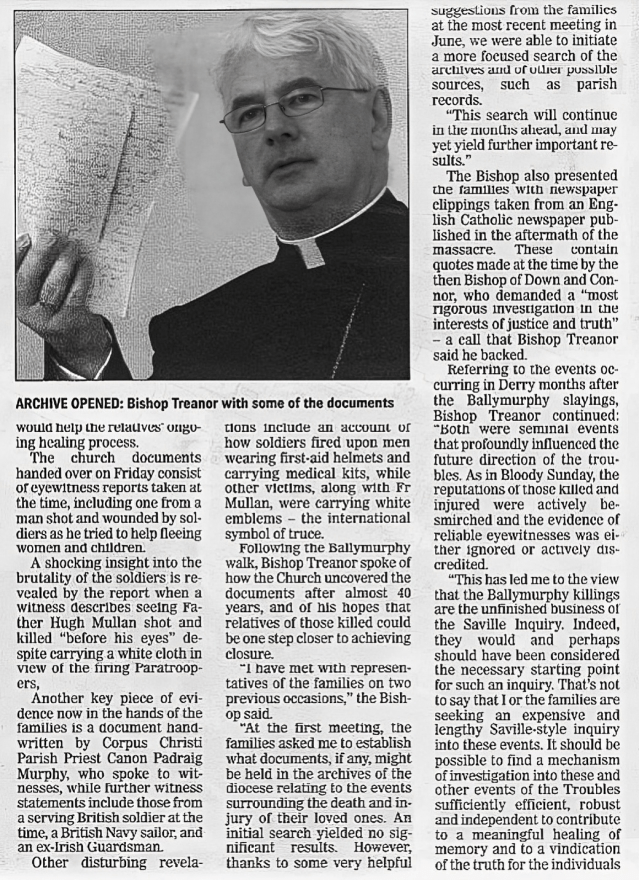
An initial search yielded no significant results.
However, thanks to some very helpful suggestions from the families at the most recent meeting in June, we were able to initiate a more focused search of the archives and of other possible sources, such as parish records.
This search will continue in the months ahead, and may yet yield further important results.
[Bishop Noel Treanor]
So why didn’t Bishop Treanor ever scour the archives – or local parish records – to find material for the innocent victims of Provisional IRA murders, bombings and disappearances including the many victims of the IRA in Ballymurphy?

Good question – no good answer!
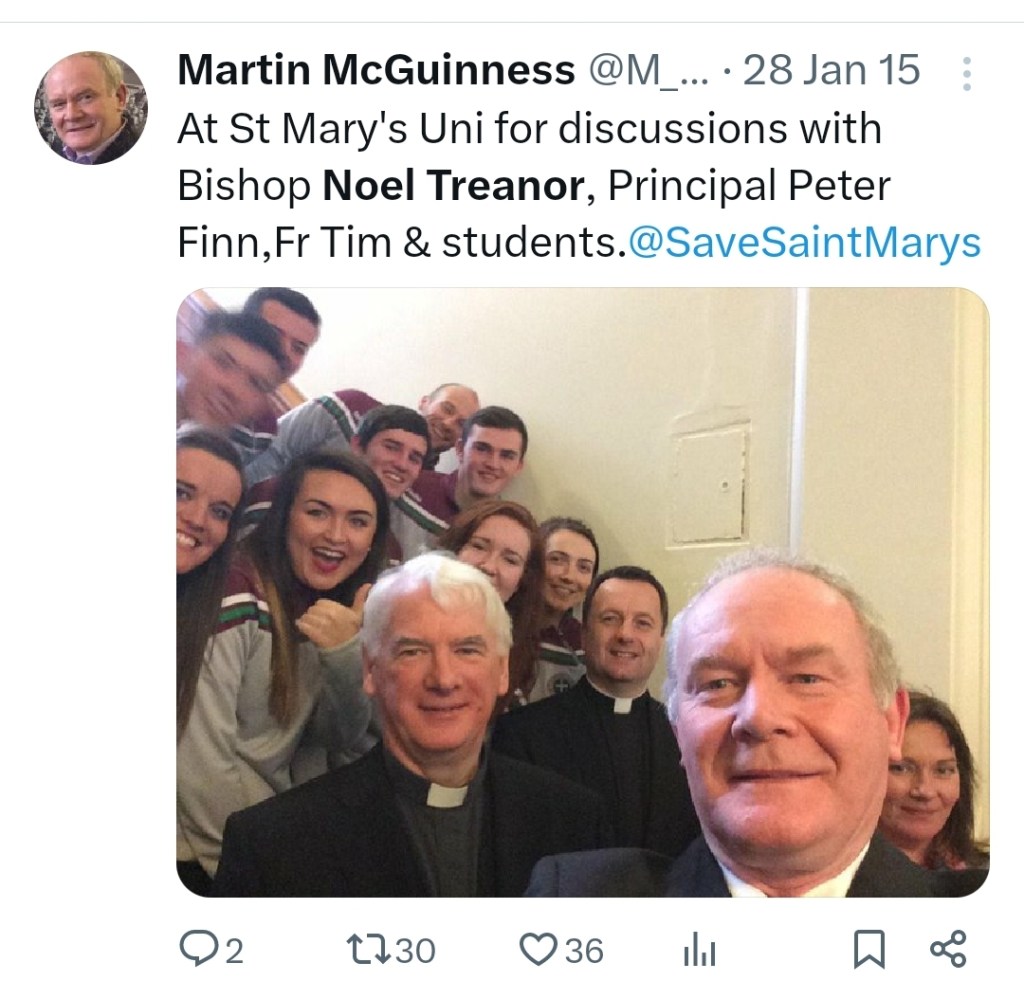
Bishop Treanor had no difficulty posing for photographs with IRA leader and mass murderer Martin McGuinness – something his brother bishops in Spain would even now find impossible to emulate with unrepentant ETA murderers…
[Read about Bishop Treanor and the Belfast Brigade of the IRA here.]
Clonard Monastery’s Secret IRA Headquarters
You can see how the Rector of the Redemptorist Monastery in Clonard, Belfast, in 1969 – Fr. Patrick Egan – fell madly in love with the young teenagers of the area who threw missiles and petrol bombs to hold back loyalist mobs and declared that “they did a great job – we were proud of them“:
Unfortunately, it posed no difficulty for the Southern Redemptorist Catholic priest and rector, Fr. Egan, to fall even more in love with the local IRA “lads” and to give them first of all sanctuary and then later a full and secret operational Headquarters from which the Belfast Brigade and also members of the PIRA GHQ Staff were free to plan and to prosecute their murderous campaign of terrorism.
It was no secret that some Catholic diocesan priests and religious orders in Northern Ireland were directly supporting the Provisional IRA in the early 1970s – there is an entire article here giving examples of diocesan priests – and priests and brothers of religious orders – supporting the Provisional IRA’s campaign of terrorism.
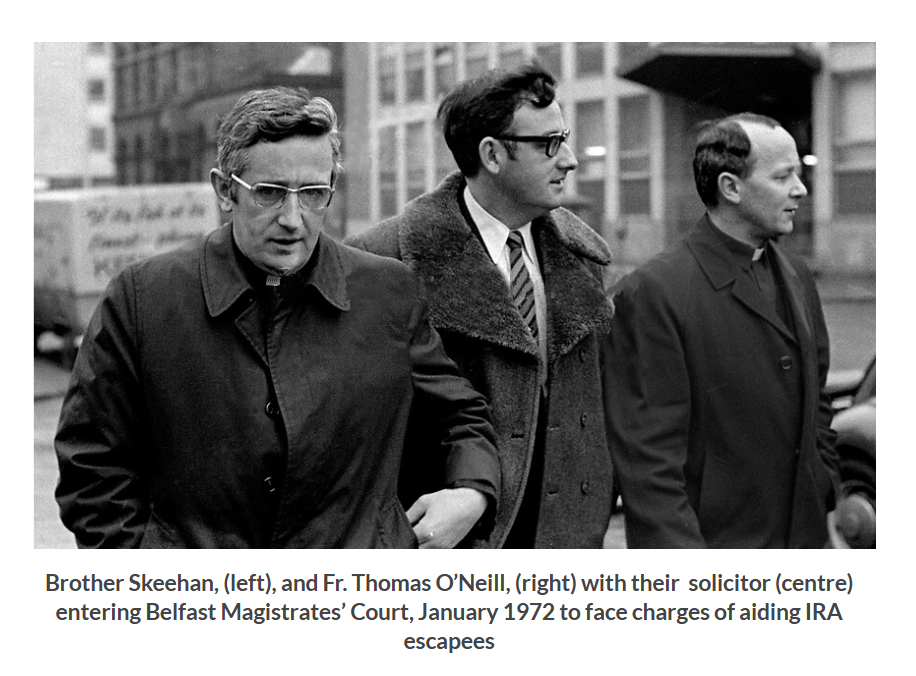
To take just one of the examples from that article, a Catholic priest and brother of the Cistercian Our Lady of Bethlehem Abbey at Portglenone, County Antrim, [Fr. Thomas O’Neill and Brother Patrick Joseph Skeehan], appeared before Belfast’s Magistrates Court on January 22nd, 1972, charged with aiding IRA escapees from Belfast Prison.
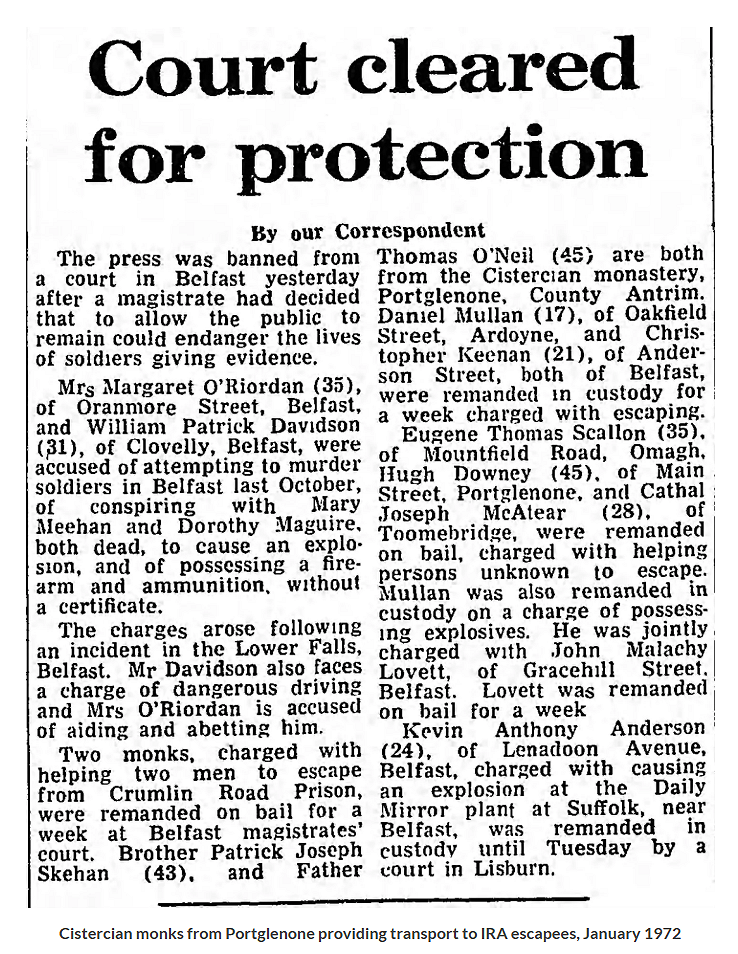
The priest and monk were captured ‘red-handed’ with two escapees in one of the monastery’s cars as they attempted to drive them across the border into the haven of the Republic of Ireland.
The Cistercian Abbey at Portglenone – like Clonard Monastery – is in the Diocese of Down and Connor – and the monastery’s public association with Provisional IRA terrorists leading to prosecutions and a court case must have generated correspondence with the Bishop of Down and Connor at the time, Bishop William Philbin, who was no friend of the IRA.
Both the Cistercian Abbey at Portglenone and Clonard Monastery in Belfast were actively supporting the Provisional IRA before the atrocity of Bloody Sunday – the later excuse of Bloody Sunday was not applicable.
The Derry Brigade IRA Dispute
In the late summer of 1971, the Derry Brigade of the IRA had an internal disagreement about who should become the Brigade O.C. – this was following the introduction of Internment on August 9, 1971, when many IRA members and leaders were arrested and detained without trial to try to limit the murders and bombings – the Human Rights atrocities – largely being carried out the the Provisional IRA.
Members of the Derry Brigade Staff had been arrested and interned.
I’ve never believed the nonsense that the internment raids only captured “innocent nationlists” or failed to arrest IRA leaders.
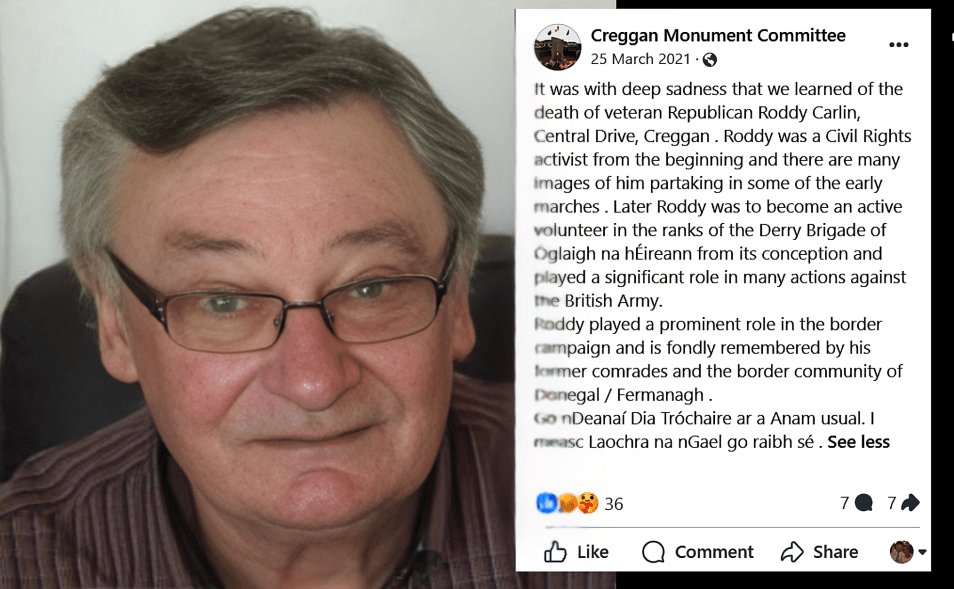
Subsequently, there were two views in the Brigade about who would best lead it – a group of IRA volunteers in the Creggan area preferred single Creggan man Roddy Carlin for the position of Brigade O.C. since he was a known ‘operator’ – a man who had seen action in 1970 when he was arrested in Donegal with two grenades and ammunition – he beat those charges before a sympathetic local judge.
Roddy had previously spent a month in Belfast prison in 1968 for a Derry Housing Action protest after which he refused to enter bail to ‘keep the peace’.
Others in the Bogside and Brandywell preferred married man Robbie Griffin for the position of Brigade O.C. – Robbie was a short and slight figure who looked like the archetypal ‘teddy boy’ with swept back hair and winklepicker boots. If Robbie had ever had any action, nobody knew about it.
The disagreement about the Brigade O.C. post was entirely friendly – there was nothing potentially violent about it.
It was rumbling on for a week or two and yet it had little or no effect on The Derry Brigade of the Provisional IRA as far as I was aware.
So how did it become a matter for the far-off Belfast Brigade of the IRA to decide?
Indeed, how did the remote Belfast Brigade of the IRA even hear about this internal Derry Brigade matter?
How did it come about that it was in Clonard Monastery’s secret IRA Headquarters that the Belfast Brigade leadership considered and decided upon who should actually fulfill the position of Derry Brigade O.C.?
The answer to all of these questions lay at 26 Beechwood Avenue between the Bogside and Creggan – home of Nationalist Party Leader Eddie McAteer.
‘Big Eddie’ was a ‘Constitutional Nationalist’ – someone who believed in the political process minus IRA violence.
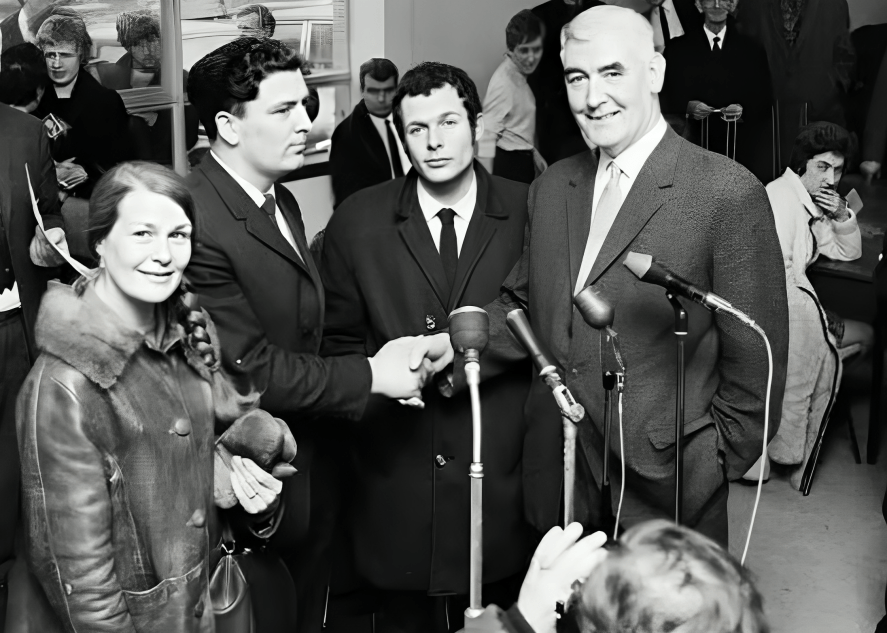
However, as in many families, Big Eddie’s younger brother, Hugh, was a ‘mad IRA man’ and had even been Chief of Staff of the IRA in the 1940s, with a number of years of imprisonment in the 1940s and 1950s including one prison escape from Derry Gaol.
Hugh McAteer lived with his family in Crocus Street in Belfast while owning and running a small travel agency on the Falls Road.
Hugh McAteer died suddenly in June, 1970 before he could throw himself once more into the new Provisional IRA fray.
Back in Derry/Londonderry, I was then a best friend of one of Big Eddie’s younger sons, Eamon McAteer, and I must have mentioned to Eamon [who was not a member of the IRA then or later] the difference of opinion regarding the Derry Brigade O.C.
It came as a surprise to me when two of Eamon’s brothers suggested to me that the Belfast Brigade of the Provisional IRA should decide on the matter and that I – young as I was – might go to Belfast to meet with the Brigade in order to hear its settlement of the dispute once and for all and carry the answer back to both sides…
It didn’t occur to me then to wonder how the Belfast Brigade came to hear about this Derry matter…
Nor did I ever stop to wonder why Eamon’s older brothers were even interested in this dispute and how they had a connection to the Belfast Brigade’s leadership.
So, one day at the end of the summer of 1971 I was driven to Belfast by two of Eamon’s brothers arriving first to the Crocus Street home of the recently deceased Hugh McAteer.
[At this time, one of Eamon’s older brothers, Hugh, was a priest of the Derry Diocese – he was not involved in this matter.]
I only knew that we were going to meet the Belfast Brigade to discuss the Derry dispute – I had no idea where this was going to happen.
From the Crocus Street house we drove to Clonard Monastery and parked the car.
We were brought to a large room filled with cigarette smoke and found among others Seamus Twomey – the Belfast Brigade O.C. – sat at a large table covered in various papers and notes.
Another figure present was Joe Cahill. There were people coming and going from this room. Ash trays and cigarettes were in full use – I was a non-smoker.
Twomey was doing business confidently and decisively and it appeared that this was his and the Belfast Brigade’s H.Q. and Safe House. The room appeared well used in its current form.
There were similar safe houses and meeting houses in Derry that I had been in – the only difference was that the Belfast Brigade’s Safe House and Operational H.Q. was in the heart of the Clonard Redemptorist Monastery and clearly with the full permission of the monastery’s priests and religious brothers.
Seamus Twomey listened to my brief telling of the Derry tale and quickly decided that the Brigade O.C. of Derry was going to be Robbie Griffin, and not Roddy Carlin. He did not explain why – but retrospect indicates that the Northern Brigades wanted to wrest control of the IRA from the Southern and Dublin based IRA leadership – and Roddy had connections that were too close to Bundoran’s Joe O’Neill and others, whereas Robbie Griffin was a Derry City IRA volunteer with fewer Southern leanings.
Roddy also had the slightest taint of socialism which the Provos at that point did not celebrate.
Meeting over, we left Clonard Monastery’s Belfast Brigade H.Q. and headed back to the Crocus Street home of the McAteers for a cup of tea before the drive back to Derry.
Almost exactly two years later, after my 1973 solo London bombing run to make up for the earlier arrest of the “Belfast 10” [including the Price Sisters and Hugh Feeney and Gerry Kelly], Seamus Twomey would ask to meet me to shake my hand at the Dublin home of the Dempsey family at 106 Iveragh Road, Gaeltacht Park, in Whitehall, Dublin.
I would also see both Twomey and Joe Cahill again at various meetings where I was with Martin McGuinness in 1973 and 1974.
Clonard Monastery’s Secret IRA Headquarters – Who Knew?
There was no sense around the room in which I met Seamus Twomey – surrounded as he was by various other IRA volunteers – that this was a hastily arranged meeting place.
On the contrary, the large smoke-filled room with an equally large table at which he was sat with various papers, notes, ash trays and cigarettes gave the appearance of a regular Safe House Brigade H.Q. such as I was used to in Derry.
Evidently, various trusted persons knew of this Belfast Brigade IRA H.Q. – the Crocus Street McAteer family knew about it – we drove directly from the home of the former IRA Chief of Staff, the recently deceased Hugh McAteer.
Hugh’s son, Aidan McAteer, first cousin of the two McAteers driving me, was soon to be imprisoned for IRA activities, much later becoming one of Gerry Adams most important SPADs – Special Advisors – see here.
The Derry branch of the McAteers – sons of Eddie McAteer – also knew about it and were able to drive me to it for the meeting without any expression of surprise at the location.
In fact, on the drive home to Derry, nobody was the least bit surprised at the IRA presence in Clonard Monastery – it wasn’t a topic of the conversation that I remember.
The Belfast Brigade IRA leadership was very well aware that it had an almost impregnable hideout in Clonard’s Redemptorist Monastery – one surviving member of the Belfast Brigade IRA leadership of the 1970s is – of course – Gerry Adams who less than a year later assumed the role of Belfast Brigade O.C. when Seamus Twomey became Chief of Staff of the Provisional IRA and based himself largely in Dublin.
The priests and brothers of the Redemptorist Monastery knew all about the IRA’s grant of the H.Q. in the monastery – it would be hard to believe that nothing whatsoever was written into the Monastery’s own archive, whether those records were held in Clonard or at another of the Redemptorist monasteries in the Republic of Ireland.
Given the nature of clergy conversation, chatter and gossip – it would be equally hard to believe that the priests of the Down and Connor diocese – seeing the prosecution of the Cistercians of Portglenone for IRA activities on the television news and in the newspapers – did not themselves know of the Belfast Brigade IRA Secretive H.Q. in Clonard Monastery.
They must have communicated this knowledge to their Bishop, William Philbin, over time – indeed, any number of priests may have sought and been granted meetings with the IRA’s Belfast Brigade leadership in Clonard in order to discuss various IRA acitivities across Belfast and impinging on their parishes and parishioners.
Clonard Monastery’s partnership with the Belfast Brigade of the Provisional IRA was – over time – no secret and there must have been very many reports from Down and Connor’s diocesan priests to their Bishop which were entered into the Diocesan Archive.
I have no doubt that British intelligence was well informed on the Clonard H.Q. by the plethora of agents in and close to the Belfast Brigade of the IRA.
Will the Redemptorist Order Ever Confess the IRA Partnership?
Given the Roman Catholic church’s teaching on truth, lying and the need for confession of sins – will the Redemptorist Order’s Clonard Monastery ever confess its partnership with the Provisional IRA and its participation in the Provisional IRA’s campaign of terrorism?
Its participation in mass murder of many innocent civilians Protestant and Catholic, many soldiers, many police officers, many innocent Protestant victims of the IRA’s sectarian murders, many unfortunates who were abducted, tortured, executed and then had their corpses disappeared?
All of these crimes and more were planned and ordered by the IRA’s leaders ensconced in the Belfast Brigade Secret IRA Headquarters in Clonard Monastery.
Will Clonard ever fess up?
Unfortunately, it was the Redemptorist Order in Northern Ireland that taught the IRA’s leadership that denying membership of the IRA was not morally wrong, but was instead a correct application of the Catholic theology of equivocation and mental reservation.
Fr. Gerry Reynolds was a Redemptorist priest of Clonard Monastery and a well-known IRA supporter.
Reynolds publicly defended Gerry Adams’ constant lies about his IRA membership.
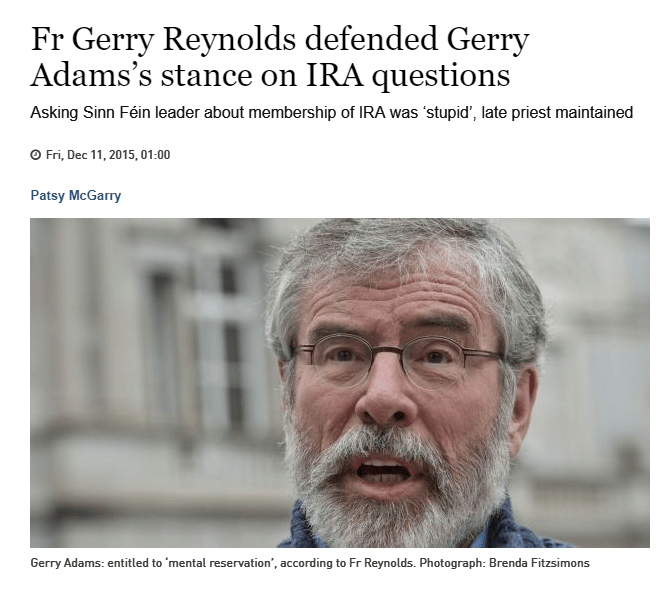
How did this Catholic Redemptorist priest Gerry Reynolds justify his teaching Adams and other IRA leaders that their denials of IRA membership were morally justified?
The Irish Times article by Patsy McGarry clarified Fr. Gerry Reynolds’ support for the IRA leaderships’ lies about membership of the IRA:
The late Fr Gerry Reynolds, who played an influential role in persuading the IRA to call its ceasefire, defended Sinn Féin president Gerry Adams’s denial of membership of the IRA on mental reservation grounds.
In an interview shortly before his death, the Limerick-born Redemptorist took the line that it was nobody’s business whether Mr Adams was in the IRA or not. It was “a legitimate mental reservation”, he said.
Told by journalist Martin O’Brien that some would claim Mr Adams was lying, he replied: “He’s entitled to that mental reservation, that he is not going to tell people that he doesn’t believe have any right to know.”
Asking Mr Adams whether he was a member of the IRA or not was “such a stupid question” because the IRA was “a secret society, and the raison d’etre of the secret society is that it is secret”.
The Murphy inquiry into clerical child sex abuse in Dublin said the Catholic Church’s concept of mental reservation allowed churchmen to knowingly mislead people without being guilty of lying.
The then archbishop of Dublin, Cardinal Desmond Connell, said: “Well, the general teaching about mental reservation is that you are not permitted to tell a lie. On the other hand, you may be put in a position where you have to answer, and there may be circumstances in which you can use an ambiguous expression . . .”
Not only did the Redemptorist Clonard Monastery give the IRA a secret operational headquarters, it also gave the Provisional IRA leadership a moral justification for the IRA campaign of terrorism – no need to confess any sins of murders and bombings, lads, sure your cause justifies everything…
So, in answer to my own question, will the mentally-reserved, equivocating Clonard Redemptorists ever confess to the Monastery’s partnership with the Provisional IRA and participation in the IRA’s terrorist campaign?
I think NOT.
In answer to my other question, is it possible to trust that Roman Catholic Archbishop Eamon Martin – having raised the possibility of the Catholic church in Northern Ireland “bringing to light the truths that remain hidden and festering about our troubled past” – will ever even INVESTIGATE the Redemptorists’ partnership with the Provisional IRA’s terrorist campaign?
Even in the extraordinary circumstances that the witnesses I’ve mentioned are STILL ALIVE and available to Eamon Martin for deposition?
No – Eamon Martin will never do so – this is one Big Horrible Truth that will be required to remain “hidden and festering about our troubled past” largely because of the remote possibility that one or more victims of the IRA’s campaign of terrorism might sue not only the Redemptorist Order in Northern Ireland, but also the diocese of Down and Connor by whose permission the Redemptorists were allowed to minister in Belfast.
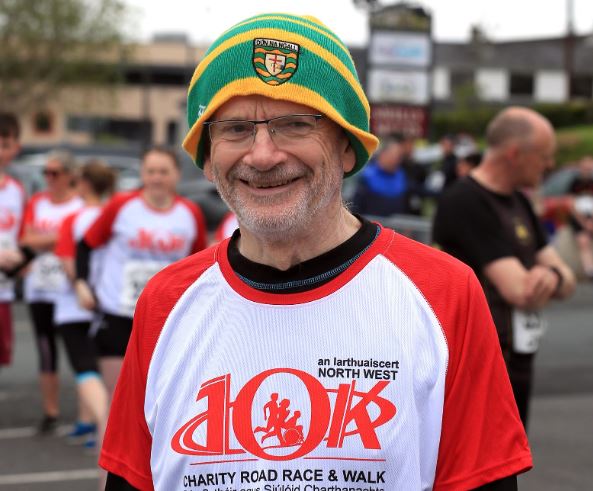
The current Bishop of Down and Connor – who was not around during the 1970s and 1980s when the Provisional IRA engaged in mass murder – is Jesuit Alan McGuckian whose term as bishop has only 3 years left to run before he is forced to retire at age 75.
McGuck will not want his term to be remembered only for the discovery that Clonard’s Redemptorist Monastery [forgetting all about the Cistercians in Portglenone] partnered with the Provisional IRA’s murderous terrorist campaign and raised the remote possiblity of a class action lawsuit by some of the many innocent victims of the IRA whose leaders were securely hidden in Clonard and thereby enabled to prosecute the PIRA’s campaign unseen.
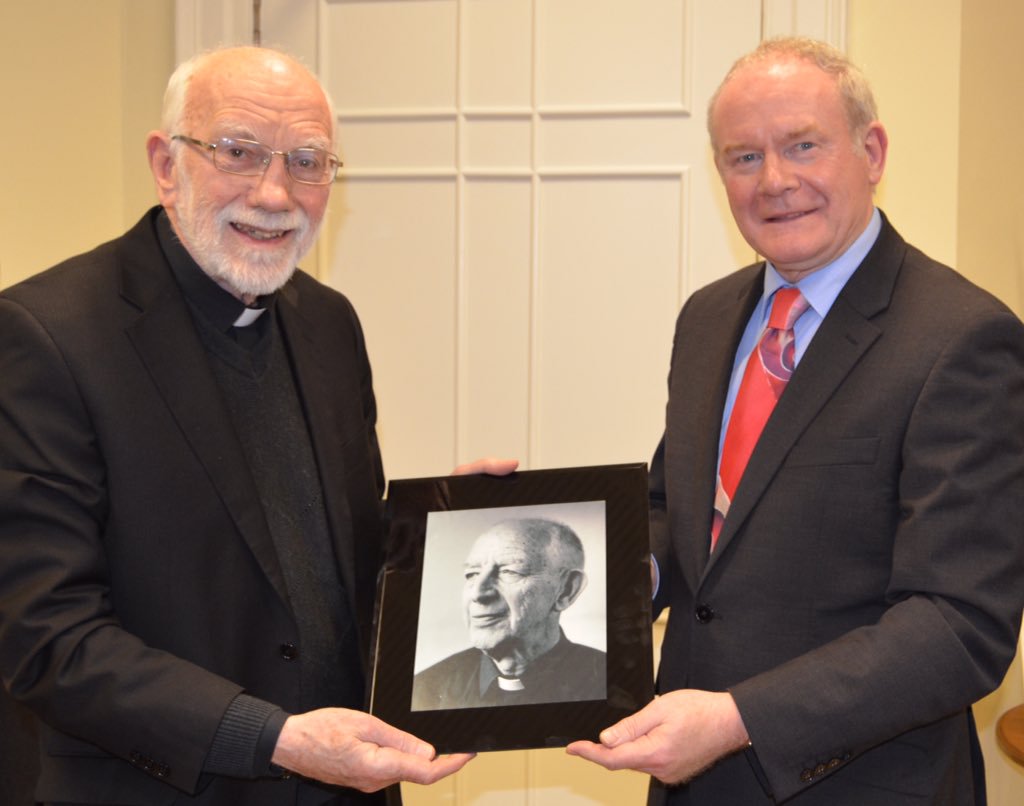
It’s a curious fact that if the Redemptorists of Clonard Monastery were to be accused of paedophilia in the 1970s and 1980s there would be an enormous amount of press coverage and demands for inquiries, but for merely facilitating the Belfast Brigade of the IRA to murder and bomb many hundreds of Catholics and Protestants, civilians, police and soldiers, men, women and children – this does not cause inordinate surprise or outrage – least of all to the Roman Catholic church.


In a conversation with me in the late nineties the Current bishop of Derry Donal Mc Keown openly referred to Clonard Monastery jokingly as ‘C company’.
LikeLike